2026 Best Power Conversion Systems for Global Buyers

Time:2026-09-10 Author:Ethan
0%

Choosing the 2026 best power conversion solutions requires more than comparing efficiency figures on a product page. A reliable Power Conversion System must match the application, grid conditions, load profile, and maintenance capacity. Global buyers may evaluate inverters, rectifiers, converters, and integrated energy platforms for factories, data centers, transport systems, and renewable projects. Each environment exposes different risks. Dust, heat, voltage instability, and limited technical support can affect performance long after installation.

This guide approaches the market from practical purchasing experience and engineering fundamentals. It considers conversion efficiency, thermal management, control accuracy, protection functions, scalability, service access, and documented test results. Independent certifications and manufacturer quality records also matter, especially when equipment crosses regional markets. However, no ranking is universally correct. A highly efficient unit may prove unsuitable for a harsh site with weak maintenance resources. That assumption can fail. Buyers should request load simulations, warranty terms, spare-parts plans, and references from comparable installations. Small details matter. A clear alarm display can save hours during a fault. A poorly specified cable interface can create costly delays. We also recognize that product data may change, and published claims deserve careful verification. The strongest choices balance measurable performance with operational reality, supplier transparency, and long-term support. This comparison is designed to help procurement teams ask better questions before signing contracts, rather than treating one specification as a complete answer. Reliability is built through evidence, site knowledge, and honest review of trade-offs.
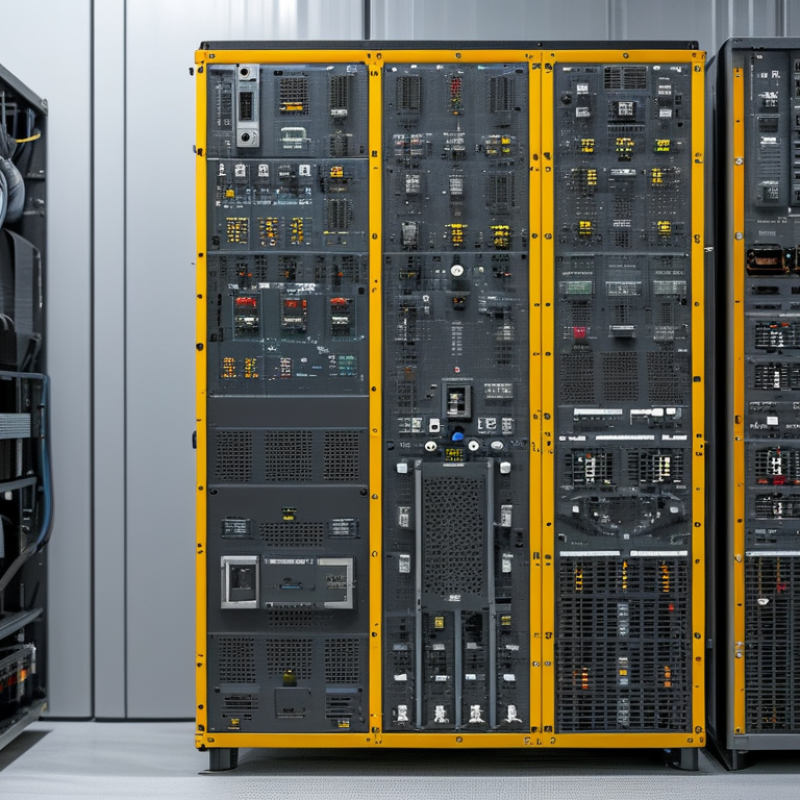
2026 Best Power Conversion Systems for Global Buyers

Definition and Role of Power Conversion Systems

Power conversion systems are engineered assemblies that change electrical energy from one form to another. They may convert alternating current to direct current, adjust voltage, or control frequency. Their role is not limited to making power usable. They also protect equipment, stabilize supply, and match energy sources with sensitive loads. A system can include converters, transformers, filters, switches, sensors, and control software.

In field assessments, technicians often begin with the load profile, not the equipment catalogue. A factory motor may need strong starting current. A server room may demand steady voltage every second. Solar storage equipment may receive variable input during cloud cover. The conversion system must respond without excessive heat, noise, or energy loss. Measured efficiency matters, but so do response time, cooling space, service access, and fault records. Small installation details can decide whether a system performs well.

Global buyers should check input ranges, output stability, safety certifications, communication interfaces, and local maintenance support. Documentation should show test conditions, not only a headline efficiency figure. This is where procurement decisions can become imperfect. A higher-rated unit is not always safer; it may run inefficiently under light loads. Conversely, a compact system may lack reserve capacity for expansion. I have seen projects underestimate harmonics and cable temperature, then revise designs after commissioning. That lesson remains useful: power conversion is both an electrical function and an operational discipline.

Core Technologies Used in Modern Power Conversion

2026 Best Power Conversion Systems for Global Buyers

Core Technologies Used in Modern Power Conversion

Modern power conversion systems increasingly combine wide-bandgap semiconductors, digital control, and advanced thermal management. Silicon carbide devices can switch at higher frequencies than conventional silicon components, reducing transformer size and improving efficiency. Gallium nitride is useful in compact, high-frequency applications, although voltage and thermal limits still require careful evaluation.

Multilevel inverters reduce voltage stress and can produce cleaner waveforms for solar plants, battery systems, and industrial drives. Grid-forming control is also gaining attention because it can support voltage and frequency during weak-grid operation. The International Energy Agency’s Electricity 2024 report expects global electricity demand to grow by more than 6% from 2024 to 2026. That growth increases pressure on converters to respond quickly and operate reliably.

Efficiency figures need context. A system rated at 99% efficiency may perform differently under partial load, high temperature, or frequent cycling. The IRENA Renewable Capacity Statistics 2025 report recorded 585 GW of new renewable capacity in 2024, representing 92.5% of total global power expansion. This scale makes serviceability, monitoring, and spare-part planning as important as peak efficiency.

The practical weakness is often overlooked.

Digital diagnostics can identify capacitor aging, cooling faults, and abnormal switching patterns, but poor sensor placement weakens the result. Buyers should request measured efficiency curves, harmonic data, overload performance, and thermal test conditions. Laboratory values are useful. Field behavior matters more.

How to Evaluate Systems for Different Global Applications

Choosing a power conversion system for global use requires more than comparing rated efficiency. The application defines the real performance target. A solar installation in a hot, dusty region needs thermal control, sealed enclosures, and easy filter maintenance. A data center needs stable voltage, rapid fault response, and predictable battery integration. Marine or remote projects may prioritize corrosion resistance, compact design, and limited-service operation.

During field evaluations, I examine the complete operating environment. Check input voltage range, frequency tolerance, overload behavior, cooling method, and standby consumption. Ask how the system performs during weak grids or frequent voltage changes.

A laboratory rating may not reflect a tropical site at 45°C. It may also ignore altitude, salt exposure, or poor ventilation. Small details matter.

Compliance evidence should match the destination market and installation type. Review test reports, protection features, electromagnetic compatibility data, and documented quality procedures. Confirm whether local authorities require specific certifications or grid-connection tests. Service capability deserves equal attention. Spare parts, remote diagnostics, response times, and technician training can determine operating costs over ten years.

Do not trust one spreadsheet.

I once focused too heavily on peak efficiency and underestimated maintenance access. The system performed well, but cleaning required unnecessary downtime. That experience changed my evaluation method. I now compare seasonal efficiency, lifecycle risks, installation conditions, and recovery procedures. Buyers should also request realistic performance data, not only ideal laboratory figures. A careful trial under representative loads can reveal weaknesses before a large international deployment.

Regional Standards, Grid Compatibility, and Safety Requirements

For global buyers, a power conversion system must match the local grid before it matches the project brochure. The IEA’s Renewables 2024 report recorded nearly 510 GW of renewable capacity additions in 2023. This rapid growth increases pressure on inverters, converters, and storage interfaces. A system designed for one market may fail another market’s voltage, frequency, or protection tests.

Regional compliance requires practical verification. Europe commonly references EN 50549 for generating units connected to distribution networks. North American projects may require IEEE 1547-2018 and applicable certification under UL 1741. IEC 62109 addresses power converter safety, while IEC 62477-1 covers broader power electronic equipment risks. Buyers should request grid-code test records, anti-islanding results, fault ride-through curves, and protection-setting ranges. Small details matter. A 50 Hz system cannot simply be adjusted through software for every 60 Hz network.

Safety also depends on installation conditions. Check insulation coordination, touch protection, thermal derating, emergency shutdown access, and enclosure ratings for dust or moisture. IRENA’s Renewable Capacity Statistics 2024 reported 473 GW of renewable additions during 2023, showing how quickly equipment is entering varied environments. Factory data is useful, but field commissioning reveals cable lengths, harmonics, grounding differences, and unexpected voltage swings. A perfect checklist rarely survives site reality. I would leave engineering margin for weak-grid operation, even when the initial simulation looks clean. Layered testing, independent review, and traceable documentation provide stronger reliability than a single compliance certificate.

Selection, Installation, and Maintenance Considerations

Selecting a power conversion system begins with the site, not the product sheet. IEA’s Renewables 2024 report forecasts nearly 5,500 GW of new renewable capacity from 2024 to 2030. That growth increases demand for inverters, rectifiers, and bidirectional converters across different grids. Global buyers should verify input voltage, frequency, overload capacity, harmonic limits, and local interconnection rules. A system rated for 50 Hz may need adjustment in a 60 Hz market. Small details matter.

Installation conditions can quietly reduce performance. Check ambient temperature, altitude, dust, humidity, and available ventilation before fixing the enclosure. At a coastal site, salt deposits may corrode terminals faster than expected. In a hot equipment room, poor airflow can trigger thermal derating. IEC 62477-1 provides a useful safety framework for power electronic conversion systems. Commissioning should include insulation checks, grounding verification, protection tests, thermal scans, and measured waveform quality. Do not trust factory settings blindly.

Maintenance planning must include the weakest component. NREL’s Annual Technology Baseline uses an inverter replacement assumption of about 15 years for utility-scale photovoltaic projects. Real conditions may shorten that period. Filters clog. Fans fail. Firmware becomes outdated. Keep spare cooling parts and DC fuses locally when logistics are uncertain. Record temperatures, fault codes, efficiency, and capacitor health during inspections. A dashboard is helpful, but it can hide intermittent faults. Manual checks still matter. Overlooking one loose connection can become an expensive lesson.

2026 Best Power Conversion Systems for Global Buyers

Typical efficiency benchmarks for common power conversion architectures across operating load levels. Higher efficiency can reduce heat generation, operating cost, and cooling requirements.

Selection guidance: double-conversion systems provide strong power-quality control, modular systems support capacity expansion and maintenance, and bidirectional converters are suitable for storage and renewable-energy applications. Actual efficiency depends on topology, load profile, temperature, redundancy, and installation quality.

FAQS

: Which technologies are shaping modern power conversion systems?

: Wide-bandgap semiconductors support faster switching and smaller magnetic components. Silicon carbide suits high-power systems. Gallium nitride supports compact, high-frequency designs. Voltage and thermal limits still need careful review.

How can multilevel inverters improve system performance?

Multilevel inverters reduce voltage stress on switching devices. They can also create cleaner waveforms. This benefits solar plants, battery systems, and industrial drives. The design may increase control complexity.

Why is grid-forming control important?

Grid-forming control can help maintain voltage and frequency in weak-grid conditions. This feature supports unstable or changing electrical networks. Buyers should test real fault-response behavior. Marketing claims are not enough.

Is a higher efficiency rating always better?

No. Rated efficiency may reflect ideal laboratory conditions. Performance can change under partial load, high temperature, or frequent cycling. Request efficiency curves across realistic operating ranges. Field behavior matters more.

What environmental conditions should buyers evaluate?

Check temperature, dust, altitude, humidity, salt exposure, and ventilation. A site reaching 45°C may reduce performance. Sealed enclosures can protect internal components. Filters must remain easy to clean.

Which technical data should buyers request?

Ask for harmonic measurements, overload performance, cooling details, and thermal test conditions. Review input voltage range and frequency tolerance. Request standby consumption figures. Test results should match the intended installation.

How important are maintenance and service arrangements?

They can determine operating costs over many years. Review spare-part availability, remote diagnostics, response times, and technician training. Check access to fans, filters, capacitors, and inspection points. Maintenance access is easy to underestimate.

How can buyers reduce deployment risks?

Run a trial under representative loads before large-scale installation. Compare seasonal efficiency with lifecycle risks. Review recovery procedures after faults. Do not trust one spreadsheet.

Conclusion

A Power Conversion System transforms electrical energy between different voltage, frequency, current, or waveform requirements, making it essential for renewable energy, industrial equipment, data centers, transportation, and backup power applications. Modern systems commonly combine power semiconductor devices, high-efficiency switching circuits, digital control platforms, thermal management, energy storage interfaces, and monitoring functions. Together, these technologies improve efficiency, stability, responsiveness, and operational visibility.

For global buyers, selecting the right system requires matching capacity, load characteristics, environmental conditions, scalability, and service requirements to the intended application. Regional grid standards, voltage and frequency ranges, electromagnetic compatibility, grounding practices, and safety certifications must also be carefully reviewed before purchase. Proper installation should include qualified commissioning, ventilation, protection coordination, and system testing. Regular maintenance, firmware management, inspection of cooling and connections, and performance monitoring can extend service life and reduce unexpected downtime. A well-evaluated solution balances technical performance, compliance, total ownership cost, and long-term reliability.

Ethan

Ethan

Ethan is a seasoned marketing professional with a deep expertise in our company's innovative product line. With a passion for sharing knowledge and insights, he takes the lead in regularly updating our corporate blog, where he explores industry trends, product features, and effective marketing......