China Top 10 Renewable Energy Solutions Manufacturers

Time:2026-10-15 Author:Ethan
0%

China’s renewable energy manufacturing sector has moved from rapid expansion to global influence. The International Energy Agency’s Renewables 2024 report expects global renewable capacity to grow by nearly 5,500 gigawatts between 2024 and 2030. China is projected to contribute almost 60% of this increase. That figure is enormous. It also creates pressure.

This article introduces the China Top 10 Renewable Energy Solutions manufacturers shaping solar, wind, battery storage, hydrogen, and integrated power systems. The companies are considered through practical indicators, including production scale, research investment, project experience, product reliability, certifications, warranties, and international service capability. IRENA reported that global renewable capacity reached approximately 4,448 gigawatts by the end of 2024. Solar and wind power drove most new additions. China remains central to both supply chains.

Fatih Birol, Executive Director of the International Energy Agency, said, “The world is on course to add more renewable power capacity in the next five years than it has in the previous 100 years.” His statement explains the opportunity behind today’s Renewable Energy Solutions market. Yet manufacturing volume alone does not guarantee dependable projects. Buyers still need transparent performance data, realistic delivery schedules, strong after-sales support, and responsible material management. A low price can look attractive beside a solar module. The full lifecycle may tell another story.

This ranking is therefore useful, but not final. Market conditions change quickly. Company quality can also vary by region, product line, and project scale. Readers should verify current certifications, financial strength, and local compliance before making procurement decisions.

China Top 10 Renewable Energy Solutions Manufacturers

Renewable Energy Manufacturing in China: Scope and Market Context

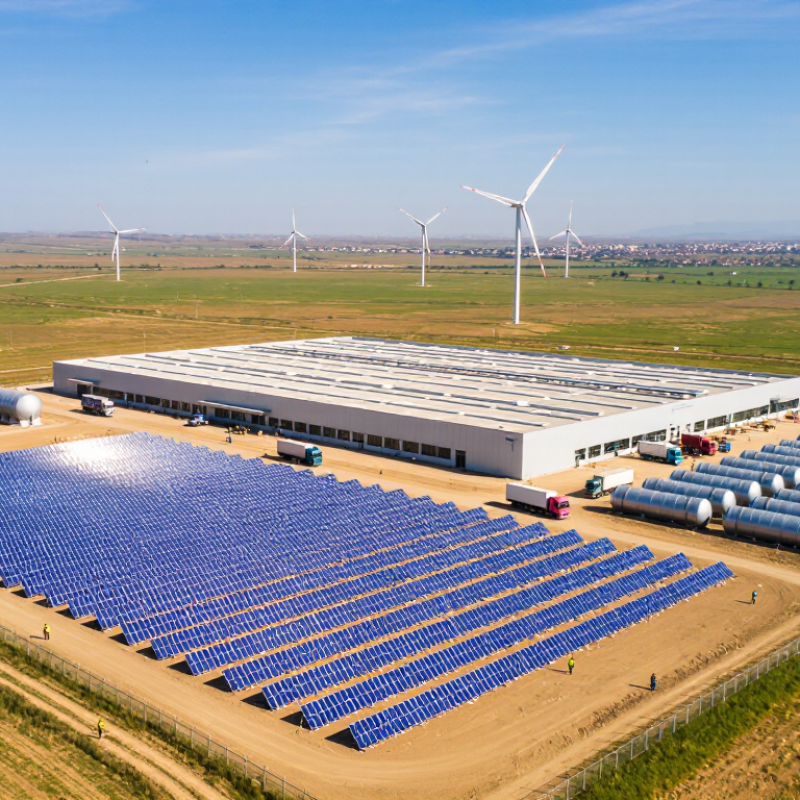
China’s renewable energy manufacturing sector covers far more than solar panels. It includes photovoltaic cells, wind turbine components, battery storage systems, inverters, heat pumps, hydrogen equipment, and grid controls. The top ten manufacturers in this field typically compete through production scale, engineering depth, and export readiness. Their factories may contain automated assembly lines, cell testing rooms, and containerized storage units awaiting shipment.

The market is supported by strong domestic demand and a dense industrial supply chain. Materials, power electronics, precision machinery, and logistics services often operate within the same regional network. This proximity can reduce lead times and simplify technical coordination. It can also intensify price competition.

Quality evidence matters more than factory size. Buyers should review third-party test reports, ISO management systems, product traceability, warranty terms, and after-sales capacity. For a battery project, I would inspect thermal management, cycle-life data, fire protection, and software controls. For solar equipment, field performance and degradation records deserve close attention. Certification alone is not enough.

Some manufacturers offer impressive customization, but communication gaps can still affect installation. This is easy to underestimate. A capable supplier may need clearer project drawings, local grid requirements, and climate data before production. Market rankings also change quickly because technology costs, trade policies, and raw material prices remain unstable. A careful assessment should compare verified performance with the supplier’s actual delivery history.

Criteria for Ranking the Top 10 Renewable Energy Manufacturers

Ranking China’s top renewable energy manufacturers requires more than comparing annual sales. A credible assessment starts with verified production capacity, engineering experience, and delivered project records. Factory audits should examine clean assembly areas, testing equipment, worker training, and traceable component storage. A polished website proves little.

Technical performance deserves greater weight than promotional claims. Review conversion efficiency, degradation rates, battery cycle life, thermal management, and equipment performance in harsh climates. Independent laboratory reports and recognized certifications can strengthen confidence. However, certificates do not replace field evidence. A solar module that performs well in a test room may struggle under dust, humidity, or repeated temperature changes.

Reliability also depends on service after installation. Ranking criteria should include warranty clarity, spare-parts availability, response times, and maintenance teams near major markets. Financial stability matters because renewable projects may operate for twenty years. Public records, audited information, customer interviews, and shipment data can support a more balanced judgment. Environmental management and worker safety should remain essential criteria, not optional advantages.

The scoring model should disclose its weighting. For example, technical quality might receive 30%, manufacturing capability 20%, project performance 20%, service 15%, and sustainability 15%. These figures are useful, but not perfect. Larger manufacturers may score well through scale while smaller specialists offer stronger innovation. Data can also be incomplete or uneven across suppliers. A responsible top-ten list should explain these limitations and update its findings as new project evidence appears.

Profiles of China’s Top 10 Renewable Energy Solutions Manufacturers

China’s top 10 renewable energy solutions manufacturers reflect a broad industrial ecosystem. The profiles cover utility-scale solar equipment, wind turbines, energy storage, smart inverters, hydrogen systems, biomass units, and grid-control technologies. Selection should consider certified capacity, operating projects, export records, warranty terms, and after-sales service. Factory scale alone is not enough.

Industry data shows why these manufacturers matter. The International Renewable Energy Agency reported that China added about 297 gigawatts of renewable capacity in 2023. That represented roughly 63% of global renewable additions. China’s National Energy Administration also stated that renewable power capacity exceeded 1.5 billion kilowatts by the end of 2023. Solar and wind production now serve crowded industrial parks, coastal ports, and remote inland communities. The figures are impressive.

Yet the profiles require careful reading. Some manufacturers excel at high-altitude wind projects, while others focus on rooftop solar or containerized batteries. A strong supplier should disclose degradation rates, safety testing, project uptime, and recycling plans. The International Energy Agency has highlighted rapid growth in China’s solar manufacturing capacity, but oversupply can pressure margins and quality control. Public rankings also mix equipment producers with system integrators. That is a weakness. Buyers should verify field performance, not trust a polished brochure.

China's Top 10 Renewable Energy Solutions Manufacturers: Market Context

This chart presents China's renewable energy market structure by installed capacity at the end of 2023. Solar power accounted for the largest share, followed by wind power, hydropower, and biomass power. The figures describe the overall market opportunity relevant to renewable energy solution manufacturers and do not represent individual company performance.

Technology, Product Portfolios, and Global Market Reach

China Top 10 Renewable Energy Solutions Manufacturers: Technology, Product Portfolios, and Global Market Reach

China’s leading renewable energy manufacturers compete through integrated technology portfolios, not single products. Their offerings commonly include photovoltaic modules, wind turbines, battery storage, inverters, power-control systems, and digital monitoring platforms. This breadth helps customers combine generation and storage at utility, commercial, and residential scales. Field experience shows that compatibility matters as much as rated capacity. A high-output module still underperforms when grid controls, installation quality, or maintenance systems are weak.

The market is expanding rapidly. IRENA’s Renewable Capacity Statistics 2025 reported 585 gigawatts of renewable capacity added globally in 2024. Renewables represented 92.5% of total new power capacity. China contributed the largest share, supported by mature supply chains and large domestic projects. The IEA’s Renewables 2024 report also expects global renewable capacity to increase substantially through 2030, with solar power driving most growth. These figures explain why leading Chinese manufacturers are strengthening overseas service teams, local warehouses, financing partnerships, and compliance support.

Global reach remains uneven. Product quality can vary between factories, projects, and export markets. That deserves careful review. Buyers should examine test certificates, degradation warranties, spare-part availability, cybersecurity controls, and local grid compatibility. BloombergNEF has repeatedly identified falling clean-technology costs as a major investment driver, but lower prices can hide lifecycle risks. Rankings of the top ten manufacturers are therefore useful, yet imperfect. Manufacturing scale is measurable; long-term field reliability is harder to judge. Reports, operating references, and transparent after-sales data provide stronger evidence.

China Top 10 Renewable Energy Solutions Manufacturers - Technology, Product Portfolios, and Global Market Reach

An anonymized comparative overview of leading renewable energy manufacturing profiles headquartered in China or operating as major China-based supply-chain participants.

Rank Anonymized Manufacturer Profile Primary Technology Core Product Portfolio Representative Innovation Main Customer Segments Manufacturing Base Global Market Reach Competitive Strength
01 Manufacturer Profile A Crystalline-silicon photovoltaics PV modules, solar cells, wafers, utility-scale solar systems and energy-storage packages N-type cell architectures, high-power bifacial modules and integrated power-management solutions Utility developers, independent power producers, commercial users and distributors Multiple large-scale production facilities in China and overseas assembly locations Projects and sales channels across Asia, Europe, the Americas, the Middle East and Africa High-volume production, vertically integrated supply chain and strong utility-project experience
02 Manufacturer Profile B Solar wafers, cells and modules Monocrystalline wafers, high-efficiency cells, bifacial modules and solar-system components Large-format wafer platforms, n-type technologies and lower-carbon manufacturing programs Large solar farms, rooftop installers, engineering contractors and module wholesalers Integrated manufacturing campuses concentrated in major Chinese industrial regions Broad export coverage, with significant demand in Europe, Asia-Pacific, Latin America and the United States Scale economics, broad product selection and strong upstream control
03 Manufacturer Profile C Solar modules and distributed generation Residential, commercial and utility modules, smart monitoring equipment and storage-ready systems High-density module layouts, improved temperature performance and digital asset monitoring Residential installers, commercial building owners, EPC companies and utility operators Automated module production lines in China supported by international service centers More than 100 national markets through distributors, EPC partners and project developers Balanced portfolio serving both distributed and utility-scale solar applications
04 Manufacturer Profile D Onshore and offshore wind power Wind turbines, blades, generators, control systems, operation services and project engineering Large-capacity turbines, permanent-magnet generators and digital condition monitoring Wind-farm developers, utilities, infrastructure investors and government-backed energy programs Large turbine and component factories across northern, eastern and southern China Installations across China and selected markets in Asia, South America, Africa and Europe Experience with complex terrain, high-wind sites and large domestic project volumes
05 Manufacturer Profile E Wind turbines and renewable power equipment Onshore turbines, offshore platforms, blades, converters and lifecycle service packages High-capacity offshore turbine platforms and integrated digital wind-farm controls National utilities, offshore developers, EPC contractors and international infrastructure groups Coastal and inland manufacturing hubs with specialized offshore assembly capability Strong domestic presence with growing exports and overseas project partnerships Large-project execution, offshore engineering and end-to-end service support
06 Manufacturer Profile F Wind power and smart energy systems Wind turbines, hybrid renewable systems, grid-control equipment and maintenance services Hybrid wind-solar-storage integration and data-based predictive maintenance Utilities, industrial energy users, island grids and renewable project developers Chinese turbine assembly plants supported by domestic component suppliers China-centered operations with selected projects and service contracts in emerging markets Flexible system integration and strong capability in customized project solutions
07 Manufacturer Profile G Power electronics and energy storage String inverters, central inverters, battery-storage systems, charging equipment and monitoring platforms Modular power conversion, grid-forming storage and cloud-based energy management Solar EPC firms, utilities, commercial buildings, industrial users and microgrid operators Advanced electronics and battery-system production in China with regional service facilities International distribution and project activity across more than 100 countries Broad product ecosystem, fast product iteration and strong solar-storage integration
08 Manufacturer Profile H Hydropower and water infrastructure Hydraulic turbines, generators, governors, control systems and plant modernization services High-efficiency turbine design, pumped-storage equipment and digital plant controls Hydropower utilities, government infrastructure agencies and international EPC contractors Heavy industrial manufacturing facilities in China with specialized turbine workshops Large domestic project base and exports to Asia, Africa, Latin America and Eastern Europe Long equipment life, engineering depth and capability to refurbish existing plants
09 Manufacturer Profile I Lithium-ion batteries and energy storage Battery cells, modules, containerized storage, electric-mobility batteries and battery-management systems Lithium-iron-phosphate chemistry, liquid-cooled storage containers and scalable battery platforms Utilities, renewable developers, grid operators, commercial users and vehicle manufacturers Large automated cell and pack factories in China with overseas production investments Global supply relationships spanning Asia-Pacific, Europe and North America High battery-production scale, competitive cost structure and strong safety engineering
10 Manufacturer Profile J Solar tracking and utility-scale balance-of-system equipment Single-axis trackers, structural components, controllers, monitoring software and service packages Terrain-adaptive tracker layouts, intelligent backtracking and reduced installation complexity Utility-scale solar developers, EPC contractors, asset owners and infrastructure funds Steel fabrication, precision-drive and control-system manufacturing in China International project deployment across sunny regions in Asia, the Americas, Australia, Europe and Africa Improved energy yield, modular installation and compatibility with large bifacial modules
Data note: The manufacturer names are intentionally anonymized. Product categories, technologies, manufacturing patterns and market coverage reflect publicly documented characteristics of major renewable-energy manufacturing segments; exact rankings, production volumes and market shares vary by reporting period and methodology.

Industry Trends and Future Prospects for Chinese Manufacturers

China Top 10 Renewable Energy Solutions Manufacturers

China’s leading renewable energy manufacturers are moving beyond low-cost production. They are investing in advanced solar cells, wind turbine components, battery storage, heat pumps, and green hydrogen equipment. Factory floors now use automated inspection cameras, digital twins, and real-time energy monitoring. These details improve consistency, although equipment upgrades remain expensive for smaller manufacturers.

Market demand is shifting toward integrated systems. Developers increasingly want solar panels, storage batteries, inverters, and grid software from coordinated supply chains. Chinese manufacturers are responding with modular products for industrial parks, rural microgrids, and offshore wind projects. Local testing centers also support safer operation under heat, humidity, and unstable grid conditions. Performance data matters more than promotional claims.

Export prospects remain strong, but conditions are becoming less predictable. Manufacturers must meet different safety, recycling, cybersecurity, and carbon-reporting requirements in each market. Supply chain resilience will require diversified materials and clearer lifecycle records. Some forecasts still underestimate maintenance costs and technician shortages. That is a weakness worth addressing. Future competitiveness may depend on repair networks, recyclable components, and transparent testing rather than production volume alone. Manufacturers that learn from field failures can improve products faster, but this requires honest reporting and long-term customer support.

FAQS

How should renewable energy manufacturers be ranked fairly?

Use production capacity, engineering experience, delivered projects, service, and sustainability records. Sales alone are not enough. The weighting should be public.

What should a factory audit examine?

Inspect clean assembly areas, testing equipment, worker training, and traceable component storage. Look for organized shelves and recorded inspections. A polished website proves little.

Which technical performance details matter most?

Review conversion efficiency, degradation rates, battery cycle life, thermal management, and harsh-climate performance. Dust and humidity matter. Test-room results can mislead.

Why are operating project records important?

Field projects show whether equipment performs beyond laboratory conditions. Check uptime, maintenance history, and operating locations. Ask for evidence from several climates.

What after-sales services should buyers compare?

Compare warranty wording, spare-parts availability, response times, and nearby maintenance teams. A broken inverter should not wait months. Service promises need written details.

How can buyers judge global market readiness?

Review export experience, local warehouses, compliance support, grid compatibility, and technical teams. Product quality may differ between factories. Verify each export model separately.

Should manufacturing scale receive the highest score?

Not always. Large factories offer volume, while smaller specialists may provide stronger innovation. Scale helps, but it cannot prove long-term reliability.

What limitations should a top-ten ranking disclose?

Data may be incomplete, uneven, or outdated. Rankings can mix equipment makers with system integrators. Findings should be updated when new project evidence appears. No ranking is flawless.

Conclusion

China has become a major force in renewable energy manufacturing, supported by large-scale production capacity, strong engineering capabilities, and an expanding domestic market. This overview examines the scope of China’s renewable energy sector and explains the criteria used to identify leading manufacturers, including technological innovation, product reliability, manufacturing scale, sustainability practices, and international market reach. The featured companies represent a broad range of Renewable Energy Solutions, covering solar power equipment, wind energy systems, energy storage technologies, smart power-management products, and integrated clean-energy projects.

The article also compares manufacturers’ technology portfolios, production strengths, service capabilities, and global development strategies without focusing on brand promotion. It highlights how Chinese manufacturers are responding to major industry trends, such as grid modernization, energy-storage demand, digital monitoring, cost reduction, and the integration of multiple renewable power sources. Looking ahead, continued research, responsible production, international cooperation, and improved supply-chain resilience are expected to shape the future competitiveness of China’s renewable energy manufacturing industry.

Ethan

Ethan

Ethan is a seasoned marketing professional with a deep expertise in our company's innovative product line. With a passion for sharing knowledge and insights, he takes the lead in regularly updating our corporate blog, where he explores industry trends, product features, and effective marketing......