How to Choose the Best Micro Hydropower System?

Time:2026-10-31 Author:Aria
0%

Choosing a Micro Hydropower system starts with the water, not the equipment catalog. A narrow stream may seem energetic, yet its dependable output depends on measured flow and usable elevation change, known as head. Both can vary by season. A careful site assessment should record dry-weather flow, seasonal peaks, pipe distance, and likely losses. Small details matter. A long, rough penstock can reduce the water pressure reaching a turbine. Nearby trees, rocks, and access paths also affect installation and maintenance.

The right system balances expected energy, site conditions, budget, and practical upkeep. Turbine type and size should match the available flow and head, while electrical controls and storage must suit the intended loads. A qualified installer can evaluate these factors and explain uncertainty in the estimates. Ask for the assumptions behind any projected output, especially during low-water months. Numbers can look precise. Nature is not. Consider how equipment will be inspected, whether replacement parts are available, and how power will reach the buildings that need it. A system that performs well on paper may disappoint if seasonal water is overlooked or routine maintenance proves difficult. This guide explores the key choices, trade-offs, and questions that help homeowners and land managers compare options realistically. The best system is not always the largest or most efficient model; it is the one that fits the site reliably and can be maintained over time.
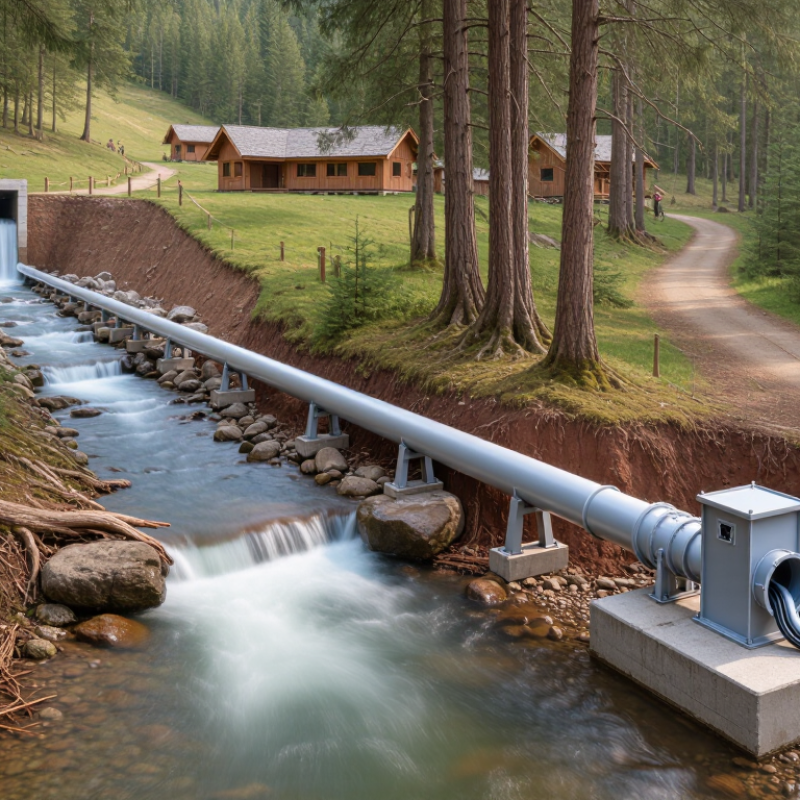
How to Choose the Best Micro Hydropower System?

Assess the Site’s Water Flow and Available Head

A micro-hydro site is defined by two measurements: usable water flow and net head. Head is the vertical drop from the intake to the turbine, after accounting for losses in the pipe. Flow is the water available to divert without harming stream conditions. Measure both during dry and wet seasons; a rainy-day reading can make a weak site look excellent. I would distrust a tidy one-day result.

Estimate electrical output with this practical formula: kilowatts = 9.81 × flow in cubic metres per second × net head in metres × system efficiency. For example, 20 litres per second and 8 metres of net head, at 60% efficiency, yield about 0.94 kW. This is an estimate, not a promise. U.S. Department of Energy guidance notes that a 10-kW micro-hydro system can serve a large home, but actual output depends on site conditions and equipment. Record stream flow across seasons, survey the elevation drop, and account for pipe length, bends, and intake screens. Those details reduce usable head. A small error matters. Check the site again after heavy rain and during the driest weeks.

Calculate Your Energy Needs and Potential Power Output

How to Choose the Best Micro Hydropower System?

Calculate Your Energy Needs and Potential Power Output

Start with the load. List each appliance, its wattage, and daily hours of use. A 60-watt lamp used for five hours needs 300 watt-hours. Add refrigerator cycling, pumps, and tools, then include a modest reserve. Your daily energy use matters, but peak demand matters too: several appliances starting together can exceed a system’s continuous output.

Next, measure the water source during the driest season, not just after rain. Record flow in liters per second and the usable vertical drop, or net head, after accounting for pipe losses. Estimate output with this formula: power in kilowatts = 9.81 × flow in cubic meters per second × net head in meters × system efficiency. For example, 20 liters per second, 12 meters of net head, and 55% efficiency yield about 1.3 kW. At steady flow, that could produce roughly 31 kWh per day, but real output will vary. Screens clog. Water levels fall. Efficiency estimates can be optimistic, which is easy to overlook. Compare seasonal output with your daily and peak needs, and have measurements checked by a qualified installer before choosing equipment.

How to Choose the Best Micro Hydropower System?

Estimated power output at different flow rates and net heads, assuming 60% overall system efficiency.

Use dependable stream flow and measured net head to estimate your site’s potential. Output is calculated as power = ρ × g × flow × head × efficiency; actual results vary with seasonal flow, site conditions, and equipment.

Match Turbine Types to the Site’s Conditions

Choosing a micro hydropower turbine starts with measuring the site, not admiring a machine. Record the vertical drop, or head, and measure stream flow during wet and dry months. A single summer reading can mislead. High head with modest flow often suits Pelton or Turgo impulse turbines, which use fast water jets. Crossflow turbines can work well with moderate head and changing flow, though performance still depends on careful sizing.

They are not magic.

Low-head sites with abundant water may suit propeller or Kaplan turbines. Kaplan units use adjustable blades, which can help when flow varies, but their controls add complexity. That matters. A narrow intake channel, leaves, grit, and flood debris can affect output and maintenance more than a brochure suggests. Check whether the intake can be cleaned safely and whether the turbine’s operating range matches measured conditions.

A neat spreadsheet cannot capture every muddy spring. Even good estimates need revisiting after seasonal observations, especially where stream levels shift sharply.

Compare System Components, Costs, and Environmental Impacts

A micro hydropower system starts with the stream, not the turbine. Measure flow and elevation change across seasons, including dry weeks. A steep drop can help, but low summer flow may limit output. Small details matter. The intake screen, settling area, and penstock all affect reliability. A blocked screen after autumn rain can reduce power quickly.

Compare the full system cost, not just the generator. The turbine and generator are only part of the budget. Intake construction, pipe length, electrical controls, wiring, and any battery storage can add substantially. A long, difficult route for the penstock may cost more than expected. That adds up. Ask for estimates that separate equipment, installation, maintenance, and replacement parts. Site conditions make broad price comparisons imperfect, so treat early figures as estimates.

Environmental effects depend on the stream and design. A diversion may leave less water in the natural channel, especially during dry periods. Sediment can collect at the intake, while construction may disturb banks and nearby habitat. Plan for adequate flow in the bypassed reach and consider how fish and sediment move through the site. These measures can change both costs and output. The trade-offs are not always obvious; a careful site assessment is worth the effort.

Check Installation Requirements and Long-Term Maintenance

Before choosing a micro hydropower system, measure both stream flow and usable head across seasons. A fast summer survey can mislead; dry months may leave the turbine underpowered. Include pipe length, bends, and intake losses in the head estimate. Small details matter. The U.S. Department of Energy notes that a 10-kilowatt microhydropower system can serve a large home, small resort, or hobby farm. That figure is a guide, not a guarantee: actual output depends on the site’s flow and head. Check whether equipment can be reached safely for screen cleaning, and whether the intake, penstock, and electrical components suit local flooding, freezing, and sediment conditions.

Plan maintenance before installation. A clogged intake can reduce output quickly, especially after storms, while grit can wear turbine parts. Leave room to clear the trash rack, inspect joints for leaks, and check bearings and electrical connections. The International Energy Agency’s Hydropower Special Market Report (2021) reports that hydropower plants in advanced economies average about 45 years old. This is not a lifespan promise for a micro system, but it shows why maintainability matters over decades. Keep a simple log of flow, output, cleaning, and repairs. A spreadsheet will not predict every storm; that limitation deserves attention when estimating savings and downtime.

How to Choose the Best Micro Hydropower System? - Check Installation Requirements and Long-Term Maintenance

Decision factor What to check Practical guidance Long-term maintenance implications
Water flow and seasonal reliability Measure stream flow across seasons, especially during the lowest-flow period. Account for water that must remain in the stream and for other water users. A site’s dependable flow is more useful for sizing than a single measurement taken during wet weather. Check local water-use rules before planning a diversion. Seasonal changes can affect output and may increase debris or sediment problems. Recheck intake conditions after storms and during seasonal low flows.
Available head Determine the vertical drop from the water intake to the turbine, then account for losses in the pipe, bends, valves, and fittings. Use net head—the usable drop after hydraulic losses—for system estimates. Survey the route and elevation before selecting equipment. Inspect the pipeline, supports, valves, and joints for leaks, movement, corrosion, or damage. Keep access points clear for inspection.
Expected electrical output Estimate output from flow, net head, and overall system efficiency. A common estimate is P (kW) ≈ 9.81 × Q (m³/s) × H (m) × η, where η is the overall efficiency as a decimal. Treat the calculation as an estimate, not a guaranteed rating. Compare expected generation with household or site demand and consider seasonal variation and transmission losses. Periodically check voltage, frequency, output, and protective devices. Have electrical work and system testing performed by qualified personnel.
System layout and turbine suitability Match turbine and generator selection to the site’s measured flow and net head. Consider whether the installation will use a diversion channel, intake, penstock, powerhouse, and return channel. Different turbine designs suit different combinations of head and flow. Request a site-specific design rather than choosing equipment from a nominal power rating alone. Ensure the turbine, generator, controls, and isolation points are accessible. Follow the equipment manual for inspection, lubrication, and service requirements.
Intake, screening, and sediment Assess leaves, branches, gravel, sediment, ice, and flood debris. Check whether the intake screen and sediment-management features can be safely reached. Design the intake to reduce clogging while maintaining safe water passage and meeting applicable environmental requirements. Inspect and clear screens as needed, with frequency adjusted to site conditions. Remove accumulated sediment safely and check for erosion or damage after high flows.
Pipeline route and construction access Review route length, slope, ground stability, stream crossings, buried utilities, access for construction equipment, and protection from freezing or physical damage. A longer or poorly routed penstock can add cost and hydraulic losses. Confirm the route and pipe design with a qualified designer before construction. Keep the route clear enough to identify leaks, washouts, exposed sections, and damage. Include pipe and access components in the inspection plan.
Grid connection or standalone operation Identify whether the system will operate independently or connect to a utility grid. Check local interconnection, metering, grounding, and electrical safety requirements. Grid-connected and off-grid systems need different controls and protection. Confirm requirements with the utility and relevant authorities before purchasing equipment. Test protection and control equipment according to applicable codes and manufacturer instructions. Keep records of inspections, faults, and repairs.
Permits and environmental constraints Check water rights, land access, construction permits, fish passage, minimum-flow rules, erosion controls, and any required environmental review. Requirements vary by location and watercourse. Contact the relevant local, regional, and utility authorities early in the planning process. Ongoing operation may require monitoring, recordkeeping, or maintenance of approved environmental measures. Include these duties in the operating plan.
Maintenance access and lifecycle cost Review access to the intake, turbine, generator, controls, and pipeline, as well as the availability of local technical support and replacement parts. Compare total ownership costs, including civil works, installation, permitting, inspections, repairs, and downtime—not just the initial equipment price. Create a site-specific maintenance schedule based on the equipment manuals and local conditions. Keep a log of inspections, cleaning, service, and performance changes.

Note: Micro-hydropower capacity classifications vary by jurisdiction. Final system sizing, construction, electrical work, and permitting should be reviewed by qualified professionals and the relevant authorities.

FAQS

What should I measure before choosing a system?

Measure stream flow and usable vertical drop during wet and dry seasons. Include pipe bends and water losses.

How do I estimate daily energy use?

Multiply each appliance’s wattage by its daily hours. A 60-watt lamp used for five hours needs 300 watt-hours. Add pumps, refrigerator cycles, and a reserve.

How can I estimate potential power output?

Use this formula: kilowatts = 9.81 × flow in cubic meters per second × net head in meters × efficiency. Estimates can be too hopeful.

What might 20 liters per second produce at 12 meters of head?

At 55% efficiency, output is about 1.3 kW, or roughly 31 kWh daily with steady flow. Real conditions vary.

Which turbine types suit high head and modest flow?

Pelton or Turgo impulse turbines often suit fast water jets and high head. Check the measured operating range.

What turbine types may suit low-head sites?

Propeller or Kaplan turbines may suit abundant water and low head. Adjustable blades can help with changing flow, but add complexity. It is not magic.

What site conditions can reduce performance?

Leaves, grit, flood debris, and pipe losses can lower output or increase upkeep. A neat spreadsheet may miss a muddy spring.

What maintenance should I plan for?

Allow safe access for screen cleaning. Inspect pipe joints, bearings, and electrical connections, and log flow and repairs. Storms still surprise us.

Conclusion

Choosing the best Micro Hydropower system starts with understanding the site. Measure the stream’s flow throughout the year and determine the available head, or vertical drop, since both affect how much electricity the system can produce. Then estimate your household or facility’s energy needs and compare them with the site’s potential power output to set realistic expectations.

Next, select a turbine suited to the water conditions, and compare the costs, efficiency, and environmental effects of the system’s components. Consider how installation may affect the surrounding area, along with access, equipment placement, and connection requirements. Finally, plan for regular inspection and maintenance to help the system operate reliably over time. A careful assessment of water resources, energy goals, practical costs, and ongoing upkeep can guide a well-informed choice.

Aria

Aria

Aria is a dedicated marketing professional with a deep passion for innovative strategies and a keen understanding of our company's product offerings. With a wealth of experience in the industry, Aria excels at crafting engaging content that highlights the unique features and benefits of our......