Choosing the right Hydroelectric Converter is a practical engineering decision, not a catalogue exercise. The converter must match the generator, turbine speed range, grid requirements, and operating profile. A mismatch can mean unstable output, unnecessary losses, or costly changes during installation. Small details matter.
The International Energy Agency’s Hydropower Special Market Report (2021) describes hydropower as the world’s largest source of renewable electricity, supplying about 16% of global electricity. That scale makes equipment choices consequential. IEA Executive Director Fatih Birol said, “Hydropower is currently the largest source of renewable electricity, but the sector is facing a range of challenges.” His remark concerns the industry broadly, but it underscores why reliability and modernization deserve careful attention.
For a project team, the right converter starts with measured conditions: generator voltage, frequency range, load variation, ambient temperature, and available cooling. A small run-of-river plant may need different controls from a large storage facility. Protection functions, harmonic performance, efficiency across partial loads, and service access also deserve review. Ask suppliers for test data and references from comparable installations, not only peak-efficiency figures. A polished specification can still miss the site’s real operating pattern. That is worth admitting early.
This guide explains how to compare converter types, check technical compatibility, and assess lifecycle costs. It also highlights questions to raise with manufacturers before purchase. No single model suits every plant. The best choice is the one that performs reliably under the conditions the project actually faces.
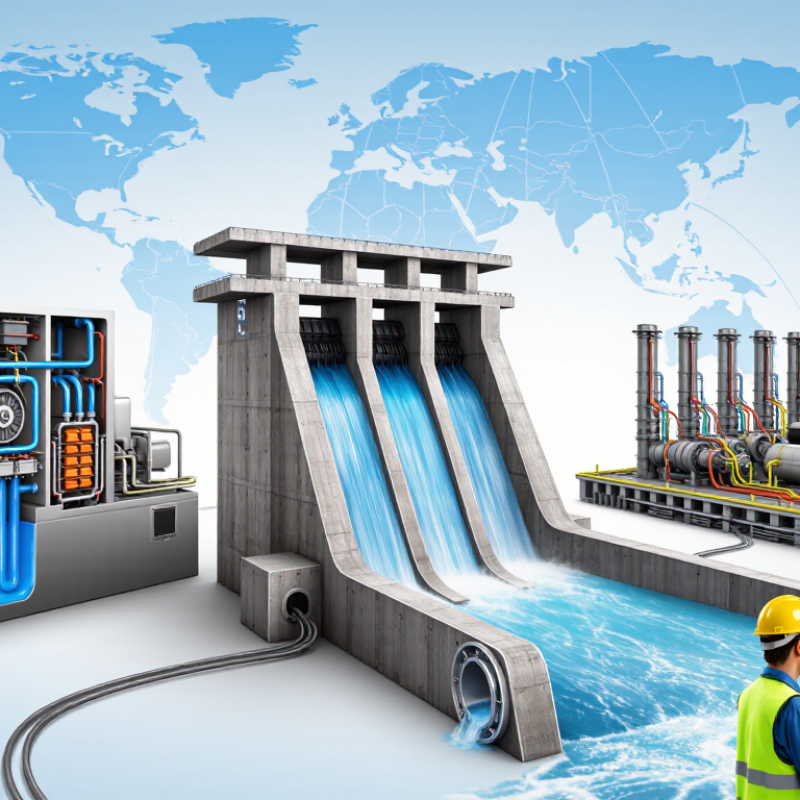
A hydroelectric converter is equipment that turns energy in moving or falling water into usable electricity. In a typical system, water passes through a channel or pipe and spins a turbine. The turbine drives a generator, which produces electrical current. More water flow or greater vertical drop can increase available power, though actual output also depends on equipment efficiency and site conditions.
The term can also refer to power electronics that adjust the generator’s output. These components may regulate voltage and frequency or convert electricity into a form suitable for a local load, battery system, or grid connection. The exact arrangement varies. At a small site, for example, changing water flow may cause output to fluctuate, so controls help keep electrical supply within operating limits. Operators also monitor bearings, vibration, and water passages; a blocked screen can reduce flow. Details matter.
Sizing is not just about the generator’s rated capacity. A careful assessment considers seasonal flow, usable head, expected loads, and maintenance access. Measurements taken during one wet week can be misleading. I would treat early estimates as provisional and verify them with longer-term site data before choosing equipment.
A hydroelectric system converts the energy of moving water into electricity. The turbine converts water energy into mechanical rotation, the generator converts that rotation into electrical power, and a power-electronic converter may condition the electricity for the grid or a specific load.
How to read this chart: The bars show typical component-efficiency ranges, not guaranteed performance. Actual efficiency depends on equipment design, operating conditions, and load. Compare converter options against your generator output, grid requirements, and expected operating range.
Before choosing a hydroelectric converter, measure the water you can reliably use, not just the stream’s most impressive moment. Record flow rate in liters per second across dry and wet seasons. For a small channel, time a container fill; for larger flows, use a suitable flow meter or professional survey. Repeat the readings. One sunny afternoon is not a dependable dataset. Note debris, sediment, and freezing risk, since each can reduce usable flow or increase maintenance.
Measure the vertical drop from intake to turbine, then account for losses in pipes, bends, and screens. This net head, paired with flow, sets the energy available. An approximate estimate is:
Efficiency varies, so avoid treating a published figure as guaranteed output. Small errors matter. Ask an experienced installer to verify measurements before sizing equipment.
List what the system must run: lights, pumps, refrigeration, or tools. Note each load’s wattage and daily hours, including motor startup surges and the longest low-water period. Compare daily energy needs with expected generation, then decide whether storage or backup power is needed. Be candid about uncertainty. Your first estimate may be wrong; keep the raw readings so they can be checked and improved. Confirm water-use permissions and site conditions locally before construction.
Compare converter types against the turbine’s operating range, grid connection, and expected load. A full-scale AC-DC-AC converter processes all generated power, allowing flexible speed control as water flow changes. It can suit variable-flow sites, but adds conversion losses, heat, and equipment cost. A partial-scale converter, often paired with a doubly fed induction generator, processes only part of the power. It may reduce converter capacity, though its speed range and control requirements differ. A directly grid-connected synchronous generator can be simpler where turbine speed and grid conditions remain stable. Less flexibility, though.
Configuration matters as much as converter type. For a grid-connected plant, check synchronization, fault response, harmonics, and the utility’s requirements. For an isolated site, confirm the converter can regulate voltage and frequency as appliances switch on and off. Picture a small mill where a pump starts suddenly: the converter must handle that load change without unstable output. Review cooling, enclosure protection, service access, and overload ratings against actual site conditions. Catalog efficiency alone can mislead.
Tips: Compare expected flow and speed ranges, not just rated power. Ask for efficiency data across the operating range, plus documented protection and control functions. Verify compatibility with the generator and turbine before purchase. I would still leave room for uncertainty; measured site data is rarely perfect, and final sizing may need adjustment.
Measure the site before comparing hydroelectric converters. Net head and flow determine how much water energy is actually available. Use measurements across wet and dry seasons, not just a single visit. A few centimeters of head loss in a long pipe can change the result. Numbers need context.
Check the converter’s rated power alongside its operating range and efficiency curve. A unit rated at 5 kW may perform poorly when flow drops below its preferred range. Ask for efficiency data at several loads, not only at peak output.
Review generator speed, output voltage, frequency, and whether the system supports grid-connected or standalone operation. Confirm that controls can handle load changes without unstable output.
The site’s less tidy details matter, too. Check allowable water temperature, sediment tolerance, screen requirements, and protection against moisture and corrosion. Ask how the unit responds to debris or sudden flow changes. Verify maintenance intervals and the availability of replacement components. A specification sheet cannot capture every site condition; that gap deserves a second look. Have an independent engineer compare expected output with measured head and flow before settling on a model.
Choosing a hydroelectric converter means planning beyond rated output. Survey seasonal flow, head, sediment, site access, and grid connection before sizing the turbine-generator and power electronics. A winter visit can reveal ice, slippery grates, or a crane route that drawings miss. Plan electrical isolation, guarded rotating parts, flood access, and clear emergency procedures. A qualified engineer should review protection settings and commissioning tests. Small sites still carry serious hazards.
Budget for the full service life, not just the purchase price. The IEA’s Hydropower Special Market Report (2021) notes that over 40% of operating hydropower plants are at least 40 years old. That makes inspection and refurbishment planning essential. Set maintenance intervals for bearings, seals, screens, cooling paths, and converter alarms. Log vibration, temperature, and downtime. IRENA’s Renewable Power Generation Costs in 2023 reported a global weighted-average cost of USD 0.057 per kWh for newly commissioned hydropower. Treat this as a benchmark, not a promise: civil works, access, financing, and spare-part lead times can shift project costs sharply. Leave room for contingencies. Costs still drift.
It is equipment that turns moving or falling water into usable electricity. A channel or pipe directs water through a turbine.
Water spins a turbine, which drives a generator. More flow or a greater vertical drop can increase available power.
They can adjust voltage and frequency or shape electricity for a local load, battery system, or grid connection. The setup varies by site.
Assess seasonal water flow, usable head, expected loads, sediment, site access, and grid connection. One wet week is not enough.
Equipment efficiency and site conditions affect output. Blocked screens, changing flow, or poor access can also matter.
Plan electrical isolation, guards around rotating parts, flood access, and clear emergency procedures. Small sites still carry serious hazards.
Check bearings, seals, screens, cooling paths, and converter alarms. Log vibration, temperature, and downtime.
Include inspections, repairs, civil works, access, financing, and spare parts. A published average cost is only a benchmark, not a promise.
Many operating hydropower plants are decades old. Their age makes inspection and refurbishment planning important; early budgets may still be incomplete.
Choosing the right Hydroelectric Converter starts with understanding how it turns the energy of moving water into usable electricity. Before comparing equipment, assess your water resource, including its flow rate, available head, and seasonal variations, then estimate the power needed for your home, site, or project. These details help determine whether the resource can reliably meet your requirements.
Next, compare converter types and system configurations, and evaluate specifications such as capacity, efficiency, operating range, compatibility, and control features. Plan the installation around site conditions and safe operation, and consider access for inspections, routine maintenance, and repairs. Finally, look beyond the initial purchase price: installation, upkeep, expected service life, and performance over time all affect the total cost. A suitable choice balances dependable output with the practical needs and limitations of the water resource.

Demin Power